



Elevators in Thailand: The Complete Guide to Price, Installation, and Modern Solutions
Table of Contents
Elevator in Thailand: TL;DR
- Elevator in Thailand is used in homes, villas, and low-rise buildings to support elderly mobility, wheelchair access, and safer daily movement between floors.
- Key decision is elevator type: common categories include passenger elevators, home lifts/platform lifts, hydraulic, belt-driven, screw-driven, plus glass and outdoor elevator options.
- Site requirements matter most: compare pit depth, shaft/hoistway space, overhead clearance, and whether a machine room is needed.
- Installation time depends on complexity: simpler home-lift projects can be faster once the site is ready; traditional elevator builds usually take longer due to civil work.
- Safety checks to cite: compliance with EN 81-41 (platform lifts), plus practical safety functions like emergency operation, automatic braking, and controlled movement.
- Ongoing ownership: plan preventive maintenance, service availability, and spare parts support, not only the purchase price.
What Is an Elevator?
An elevator is a vertical transportation system designed to move people or goods between floors. Traditionally, elevators were hydraulic or traction-based and required deep pits and machine rooms.
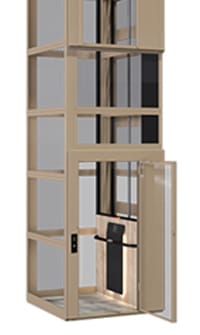
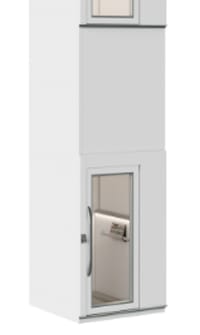
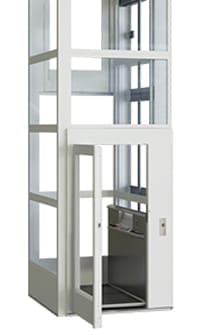
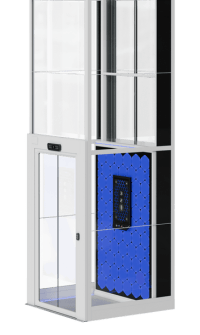
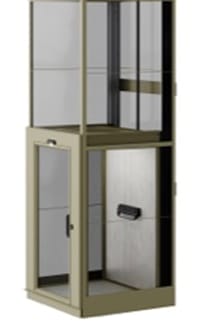
But modern residential elevators like Cibes screw-driven elevators use compact designs, require minimal construction work, and integrate seamlessly into homes.
What are the Types of Elevators in Thailand?
What is a Residential Elevator?
- Designed for private homes and villas.
- Compact, space-saving, and energy-efficient.
- Perfect for elderly family members or wheelchair users.
How about Passenger Elevators?
- Found in condominiums, offices, and commercial spaces.
- Higher load capacity (6–15 people).
- Usually hydraulic or traction.
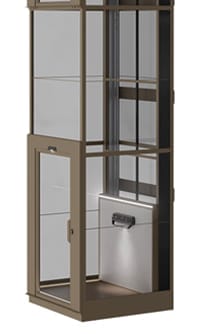
What is the definition of Glass Elevators
- Aesthetic choice with panoramic views.
- Popular in luxury homes, showrooms, and malls.
- Built with laminated safety glass meeting EN 12150 like Cibes.
What are Outdoor Elevators?
- Installed outside homes or buildings when space indoors is limited.
- Must be resistant to humidity, sunlight, and rainin Thailand’s climate.
What is a Screw-Driven Elevator (Cibes Technology from Sweden since 1947)
- Require no machine roomand no deep pit.
- Occupy only 73% of traditional space.
- Easy installation in new or existing buildings.
How Does an Elevator Installation Works in Thailand?
Installing an elevator involves careful planning between homeowners, architects, and suppliers.
What are the usual Structural Requirements?
- Pit depth: Traditional elevators = 1–1.5m; Cibes screw-driven elevators = 50mm.
- Machine room: Traditional elevators require a separate room; Cibes elevators are machine-room-less.
- Shaft: Options include concrete shaft, metal shaft, or self-supporting shaft (ideal for retrofitting).
What is an Elevator Installation usual Timeline
- Traditional elevator: 8–12 weeks.
- Cibes home elevator: for 2 stops, in as little as 5-7 days, or up to 2–4 weeks depending on floors and complecity
What kind of Special Elevator Cases?
- Outdoor installation: requires weatherproofing.
- Glass elevators: require laminated safety glass.
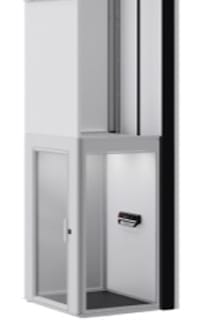
- Small houses: often prefer compact platform elevators like Cibes Uno.
Elevator Price in Thailand (2025 Guide)
| Elevator Type | Starting Price (THB) | Stops | Special Notes |
|---|---|---|---|
| Cibes Uno (Home Elevator) | 899,000 EX VAT | 2 | Entry model, compact size |
| V70 Elegance Elevator | 1,204,000 EX VAT | 2 | Stylish design, mid-range |
| V80 Elegance Elevator | 1,332,000 EX VAT | 2 | Large family homes |
| V90 Elegance Elevator | 1,463,000 EX VAT | 2 | Premium finishes, advanced tech |
All prices exclude 7% VAT and and do not include installation adjustments / civil work.


Elevator Safety & Standards
When choosing an elevator in Thailand, safety is the number one priority. At Cibes, every elevator is designed, tested, and certified to meet strict European and international standards.
- EN81-41 Certification: All Cibes platform elevators are tested and certified by Liftinstituut, one of Europe’s most recognized independent certification bodies. This ensures compliance with European safety requirements for vertical platform lifts.
- ISO 9001 & ISO 14001 Certifications: The Cibes production factory is audited and certified by TÜV Rheinland, guaranteeing both quality management (ISO 9001) and environmental management (ISO 14001).
- Additional Safety Features: Cibes elevators include emergency lowering, child-safe doors, and automatic braking systems to protect every passenger.
This combination of Liftinstituut safety approval and TÜV Rheinland factory certification ensures that Cibes elevators deliver world-class safety, reliability, and sustainability for Thai homeowners and businesses.
Elevator Maintenance in Thailand
Like cars, elevators need regular service.
- Preventive Maintenance: Monthly / quarterly / yearly or more frequent visits, safety inspections, lubrication.
- Spare Parts: Always available from factory-direct suppliers like Cibes.
- Cost: 10–15% of the elevator price per year.
- Special Packages: Buy 2 years, get 3 years (popular promotion).
Choosing the Right Elevator for Your Home or Business
Checklist for homeowners and developers:
- Space available: Do you have room for a shaft or prefer a self-supporting elevator?
- Purpose: Family use, elderly care, wheelchair accessibility, or commercial use?
- Budget: Entry-level starts at THB 899,000 EX VAT for Cibes UNO; premium models exceed THB 1.5M.
- Design: Glass elevator, panoramic view, or compact indoor platform?
- Supplier: Ensure factory-direct, certified, and with a service team in Thailand.
Case Studies: Elevators in Thai Homes
Bangkok Luxury Villa
- Installed Cibes V90 glass elevator with panoramic views.
- 3 stops, self-supporting shaft.
Chiang Mai Family Home
- Cibes Uno for elderly parents.
- Installed in 3 weeks with minimal renovation.
Phuket Beach House
- Outdoor elevator resistant to humidity and sea air.
Frequently Asked Questions (FAQ) on Elevators
Q: How much does an elevator cost in Thailand?
A: Prices start at THB 899,000 EX VAT for a 2-stop home elevator from Cibes (UNO model). Premium models exceed THB 1.5M (Cibes V80)
Q: Do elevators need deep pits?
A: Traditional elevators require 1–1.5m pits. Cibes screw-driven elevators need only 50mm or none with a ramp.
Q: Can I install an elevator in an existing house?
A: Yes. Machine-room-less elevators like Cibes can be retrofitted in most homes.
Q: Are glass elevators safe?
A: Yes. Cibes uses laminated safety glass certified to EN 12150.
Q: How long does installation take?
A: Traditional elevators = 8–12 weeks; Cibes home elevators = 2–4 weeks.
Why Choose Cibes Elevators in Thailand
- Swedish heritage since 1947: global presence in 70+ countries.
- Factory direct: guaranteed spare parts & long-term service.
- Eco-friendly: energy-efficient screw-driven system.
- Showrooms in Bangkok, Chiang Mai, Phuket, Udon Thani: experience before you buy.
Book a showroom visit today to see how a Cibes elevator can transform your home.
Discover More about Cibes Lift Premium Home Lifts
Bangkok Showroom
2113, 1 New Petchaburi Rd, Bang Kapi, Huai Khwang, Bangkok 10310
ChiangMai Showroom
123/6 Moo 15 Chonprathan road, Suthep, Mueang Chiang Mai District, Chiang Mai 50200
Phuket Showroom
Unit 20/82(Park plaza D), Moo2 Thepkasattri Rd, Ko Kaeo, Phuket District, Phuket, 83000
Facebook : https://www.facebook.com/CibesLiftThailand
Instagram : https://www.instagram.com/cibesliftthailand/
Line : @cibes
get more informations https://www.cibeslift.co.th/homelift-form for contact and get quotation!

Our Testimonials

Interview with Kru Ngor
“There are 2 main reasons on why I decided to install a home lift. First, my mother is over 80 and living on the 3rd floor…”

Interview with Dr. Osot and Dr. Anong Lekakul
“I now reached an elderly age, so I thought of installing a home lift to prevent accidents…”
Case Study | Cibes Lift (Thailand)

Cibes Extra | Hospital Elevator 2 Floors RAL9016 Color (Size 1405×2480)
-
Cibes Extra | Hospital Lift 2 floors with RAL9016 Colors (Size 1405×2480)
-
Cibes Extra | Goods Elevators 3 floors with RAL9016 (Size 1405×2480)
-
Cibes Extra | Goods Elevators 2 floors with RAL9016 (Size 1405×2480)


