
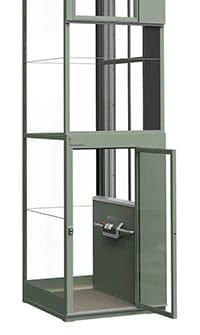
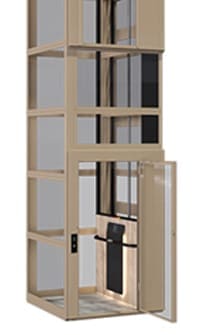
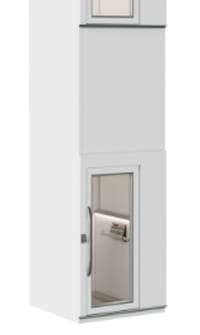
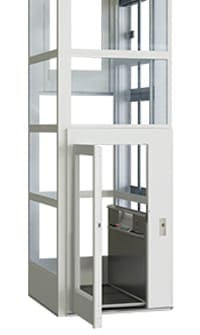
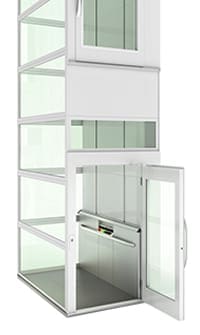
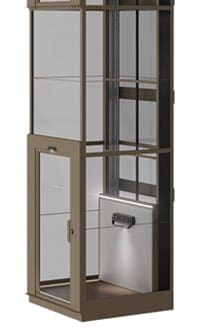
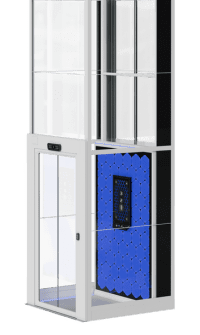
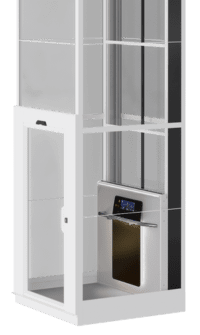
Home lift price at a glance
TL;DR: If you’re comparing home lift price in Thailand for typical 2–4 stop homes, screw-driven models often deliver the lowest total installed cost once you include building works. For background on home lift solutions and general home lifts, see the primers.
What “starting price” really means
It’s the entry configuration for a standard installation. Your actual home lift price depends on travel (number of stops and floor-to-floor heights), door layout, cabin size/payload, shaft type (site-built vs self-supporting), finishes, and site conditions. A site survey produces the final quote.
1) How lift technology affects home lift price
Bottom line: The drive system sets both equipment and site-work costs (pit, shaft, headroom, power, maintenance). That’s why different technologies land at different installed prices.
Traction (roped/MRL)
Price impact: Reasonable for tall buildings, but in homes the civil works, counterweight space, reinforced shaft, deeper pit, more headroom, often push the total cost higher than expected.
Pros: Faster travel; efficient on long runs.
Cons: Typically louder, more moving parts, higher maintenance than screw; overkill for 2–4 stops. Requires a machine room in many configurations.
Hydraulic
Price impact: Hardware can look cheaper upfront for short travel, but needs a pump unit + oil tank and a pit; oil changes add ongoing cost.
Pros: Smooth ride, relatively quiet.
Cons: Needs space for equipment, higher energy on ascent, and costs rise with more stops.
Screw-driven (home-lift)
Price impact: Unit price can be higher than basic hydraulic, but you usually avoid a machine room and need little to no pit. Self-supporting shafts cut civil works. Net installed price for 2–4 stops is often competitive or best.
Pros: Very quiet, compact footprint, simple maintenance, quick install; optimized for homes.
Cons: Lower top speed; not for very tall buildings.
Takeaway: For most houses, a screw-driven home lift hits the best balance of price, build work, and comfort.
2) Why house height and floor layout change the home lift price
Short answer: They define travel, clearances, door layout, and structural changes, the four biggest drivers of home lift price beyond the device itself.
Total travel & compliance
The sum of floor-to-floor heights sets travel. Every technology and model has specific limits for max travel, pit, and overhead (top-of-shaft). Low headroom or high travel may force a different model or extra work.
Shaft & civil works
Slab thickness, beams, and stair voids dictate shaft size and whether a pit is possible. Cut-outs and reinforcement add cost.
Door/landing configuration
Same-side, through-car (front/rear), or 90° entry per floor affects car layout, door count, and installation time. Mixed entries usually cost more.
Power/equipment location
Some systems need a machine room or specific controller placement. That can add space and electrical work.
What to provide for an accurate quote
- Number of stops and exact floor-to-floor heights (each level).
- Headroom at the top floor landing.
- Door orientation per floor (front / 90° / through-car) and constraints (stairs, beams, walls).
- Any limitations (no pit allowed, narrow void).
3) How size and maximum load influence the home lift price
Short answer: Larger car dimensions and higher payload (kg) increase equipment cost, door width, shaft footprint, and electrical needs, raising the home lift price.
Guidance by use case
Elderly/daily convenience (no wheelchair)
Inside ~800–900 × 1,000–1,200 mm; door clear width ≥ 800 mm; payload 250–300 kg.
Standard wheelchair
Inside ~900–1,000 × 1,250–1,400 mm; door ≥ 900 mm; payload 325–400 kg.
Wheelchair + attendant
Inside ~1,100 × 1,400–1,500 mm; door ≥ 900–1,000 mm; payload 400–500 kg.
Hospital bed (often beyond home-lift scope)
Inside ~1,100 × 2,100 to 1,400 × 2,400 mm; door ≥ 1,000–1,100 mm; payload 600–1,000 kg → usually a commercial-grade solution.
Selection note: Screw-driven home lifts typically come in many standardized footprints (dozens of sizes on certain model lines), which helps match real homes without heavy masonry. If space is tight, prioritize door clear width and turning radius first, then choose the smallest safe car.
Home lift safety standards and their impact on price
Short answer: Certification and redundancy add cost, but they reduce risk and downtime.
What to verify
- CE mark with independent notified-body testing (e.g., Liftinstituut BV like all Cibes Lifts).
- Relevant standards by product category (home/platform lifts vs passenger lifts). See Certification for details.
- Core protections: interlocked doors, light curtain/safety edges, emergency stop & alarm, auto-rescue/battery lowering, overload protection, obstruction sensors.
- Anti-fall system: e.g., safety-nut mechanical arrest for screw-driven lifts; overspeed governor for traction.
- Install & service: certified installers, scheduled maintenance, and parts availability.
Why it changes price: Redundant brakes/safety nuts, rescue batteries, certified door systems, and compliant controls are not optional if you want safe, legal, and reliable operation at home.
5) What is a home-lift shaft and why it affects price
Short answer: The shaft (hoistway) is the vertical enclosure. You can build it on site or use a self-supporting shaft supplied with the lift. The choice hits space, civil works, timeline, and cost.
Site-built shaft
Good in new builds; you control finishes and fire separations. Requires precise internal clearances, pit (if needed), and headroom.
Self-supporting shaft
Factory system (aluminum/steel/glass panels). Ideal for retrofits; usually no machine room and minimal/no pit. Clean, fast installs with predictable tolerances.
Effect on price: If you didn’t plan a shaft, the self-supporting option often cuts masonry and steelwork, making the total project cost lower and faster.
6) Renovation/construction items that add to home lift price
Short answer: Budget for civil works, MEP, and finishes, not just the lift.
Typical line items
- Pit & base: excavation, waterproofing, rebar, concrete (or a surface ramp if pitless).
- Shaft/structure: site-built hoistway or anchoring/steel framing; slab cut-outs; beams/headers.
- Headroom & openings: top-of-shaft clearance; door cut-outs at each level; lintels; relocating utilities.
- Electrical: dedicated breaker, shaft lighting, emergency lowering/UPS, earthing; some systems may require 3-phase.
- Finishes & making good: thresholds, plaster/paint, glazing/panels, debris removal.
- Compliance/admin: engineer sign-off; inspections/permits where applicable.
Technology differences
- Traction: deeper pit, more headroom, counterweight space, possible machine room.
- Hydraulic: pit + pump unit & oil tank room/closet; ventilation.
- Screw-driven: no machine room, little/no pit (often 0–50 mm, ramp option), available self-supporting shaft → less structural work, cleaner install.
Cost-control tips
- Reuse a stair void; keep same-side doors where possible; confirm headroom early; pull a dedicated power feed before install.
7) Technology & innovations that can shift the home lift price
Short answer: Newer tech can cut running costs, reduce noise, and improve UX, sometimes at a modest equipment premium.
- Energy-efficient drive/controls: Lower annual kWh usage; potential for smaller breakers in residential settings.
- Noise reduction packages: Quieter rides (library-level dB in some configurations) support open-plan installs.
- Smart features: Better fault diagnostics, remote support, smoother acceleration profiles, can lower lifetime costs.
If your priority is lowest total cost of ownership, consider models with proven energy/noise packages even if hardware costs a bit more.
Design options and how they affect your home lift price
Short answer: Aesthetics can change the number. Glass shafts, panorama panels, designer doors, premium floors/walls, and custom finishes add to the home lift price, but they raise satisfaction and resale value.
- Glass/panoramic shafts: More expensive than solid panels; keep spaces bright and showcase architecture.
- Cabin finishes: Premium floors/walls/lighting cost more; easier to justify in principal living areas.
- Doors: Automatic vs manual, glazing, and finish selections impact both price and lead time.
Pragmatic approach: Lock the functional spec first (size, doors, travel), then allocate budget to the 1–2 design upgrades you’ll appreciate daily.
9) Reliability, after-sales, and the real cost of ownership
Short answer: The cheapest install can become expensive if after-sales is weak.
- Direct factory presence vs. distributors: Subsidiaries with long-term parts/service typically deliver faster response, better documentation, and predictable maintenance.
- Service plans: Preventive maintenance is non-negotiable for safety; check availability, SLAs, and costs up front.
- Spares: Confirm local parts inventory and lead times.
Why it matters: A slightly higher purchase price with strong after-sales support often saves money and hassle over 10–20 years.
FAQs: quick answers about home lift price in Thailand
What’s the real starting point?
For 2 stops (size S), starting prices begin around 899,000 THB ex VAT (about 961,930 THB incl. VAT), depending on model and options.
What changes the price the most?
Technology, number of stops, floor heights, door layout, cabin size/payload, and shaft type. Finishes/options and site constraints matter too.
Is screw-driven cheaper overall?
For most homes, yes once you include civil works. No machine room and minimal pit often reduce the total installed cost.
How do I get an exact number?
Share floor-to-floor heights, door orientation per floor, any shaft/void details, and preferred cabin size. A site survey finalizes the quote.
Home Lift Technology Comparison
Choosing the right lift technology is the most important factor in your overall investment.
| Feature | Screw-Driven Lifts | Hydraulic Lifts | Traction Lifts |
|---|---|---|---|
| Pit Required | No | Yes (Often deep) | Yes |
| Machine Room | No | No (but requires a large oil tank) | Yes (Above the top floor) |
| Noise Level | Quietest (Preferred for homes) | Quiet | Loudest |
| Structural Impact | Minimal | Moderate (Pit and oil tank space) | Highest (Pit and machine room) |
| Best For | Existing homes, quiet operation, and minimizing construction costs. | High-rise buildings where speed is a priority, but noise is less of a concern. | High-rise buildings where speed is a priority, but noise is less of a concern. |